


Avoiding Sweetheart Scams
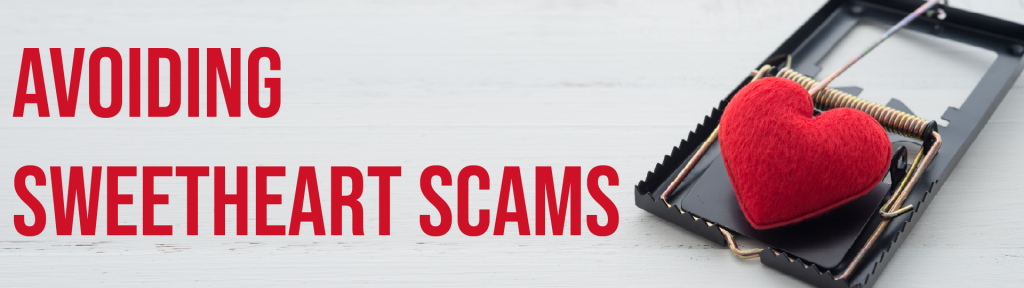
With Valentine’s Day approaching, love is in the air.
And while getting hit by Cupid’s arrow can often feel new and exciting, it’s important to be wary of a fairy tale romance that turns out to be too good to be true.
Sweetheart or romance scams are on the rise, which involve scammers pursuing romantic relationships with their victims with the sole purpose of stealing their hard-earned money. According to the Federal Trade Commission, Americans lost nearly $1.14 billion to romance scams in 2023, with median losses per person of $2,000.
At Firefighters Community Credit Union, we’re here to help protect your finances and shield you from fraudsters who want to leave you and your account broken-hearted.
Signs of a Sweetheart Scam
Sweetheart scams overwhelmingly take place online, where scammers can manipulate information to make the situation appear much different than reality. While perpetrators of sweetheart scams may have names and profile pictures attached to their accounts, that doesn’t mean they’re being truthful in how they’re presenting themselves.
Scammers often feature attractive photos on their profiles to lure you in, usually move quickly, and say all the right things to make their victims feel a sense of attachment right away. They typically give an excuse for not being able to meet in person and say they’re working in a profession that often requires travelling for work, i.e., the military, construction, or an overseas student.
Once they establish a romantic and emotional connection with their victim, romance scammers often ask for money to cover the cost of an unexpected emergency, such as a car repair, travel expenses, or a phone or internet bill to maintain the connection.
Scammers can start with a small financial ask and then continue to request more money gradually. It is also common to press for a large sum right away and for urgent action. They’ll often ask for payment through non-traditional methods, such as gift cards or wire transfers.
How to Protect Yourself
Always meet potential romantic matches in person in a public place or via video, especially before sharing any personal or financial information. If the person refuses, especially multiple times, you’ll likely know something is fishy.
A good rule of thumb is that if something feels too good to be true, it usually is. You can run the situation by a friend or loved one and get their advice. You can also search for their name and ‘scam’ online to see if any results appear or run a reverse image search to determine the origin of their profile picture.
Even if the person you’re talking to online is pressuring you or sharing a sympathetic story, you should never feel forced to send money or share personal financial information. If the person you’ve connected with is in it for the right reasons, they’ll never demand that you give them money.
If you’ve already sent money or someone has your financial information, inform your credit union and any other financial institution right away and shut off the funds to the would-be scammer.
Seniors Beware
In recent years, fraudsters have increasingly targeted seniors for sweetheart scams due to factors ranging from robust retirement accounts to a higher likelihood of living alone. According to the FBI, 6,700 people over the age of 60 lost more than $350 million to sweetheart scams in 2023.
If you’re a senior and feel like you may be a victim of a sweetheart scam, contact a friend, loved one, or your financial institution right away and cut off all contact with the suspected scammer.
We’re Here to Help
If you have questions about your financial well-being or if something doesn’t feel quite right, give us a call or visit a local branch today. We’re here to help make sure you and your hard-earned money are well protected.
Posted In: Guest Blog